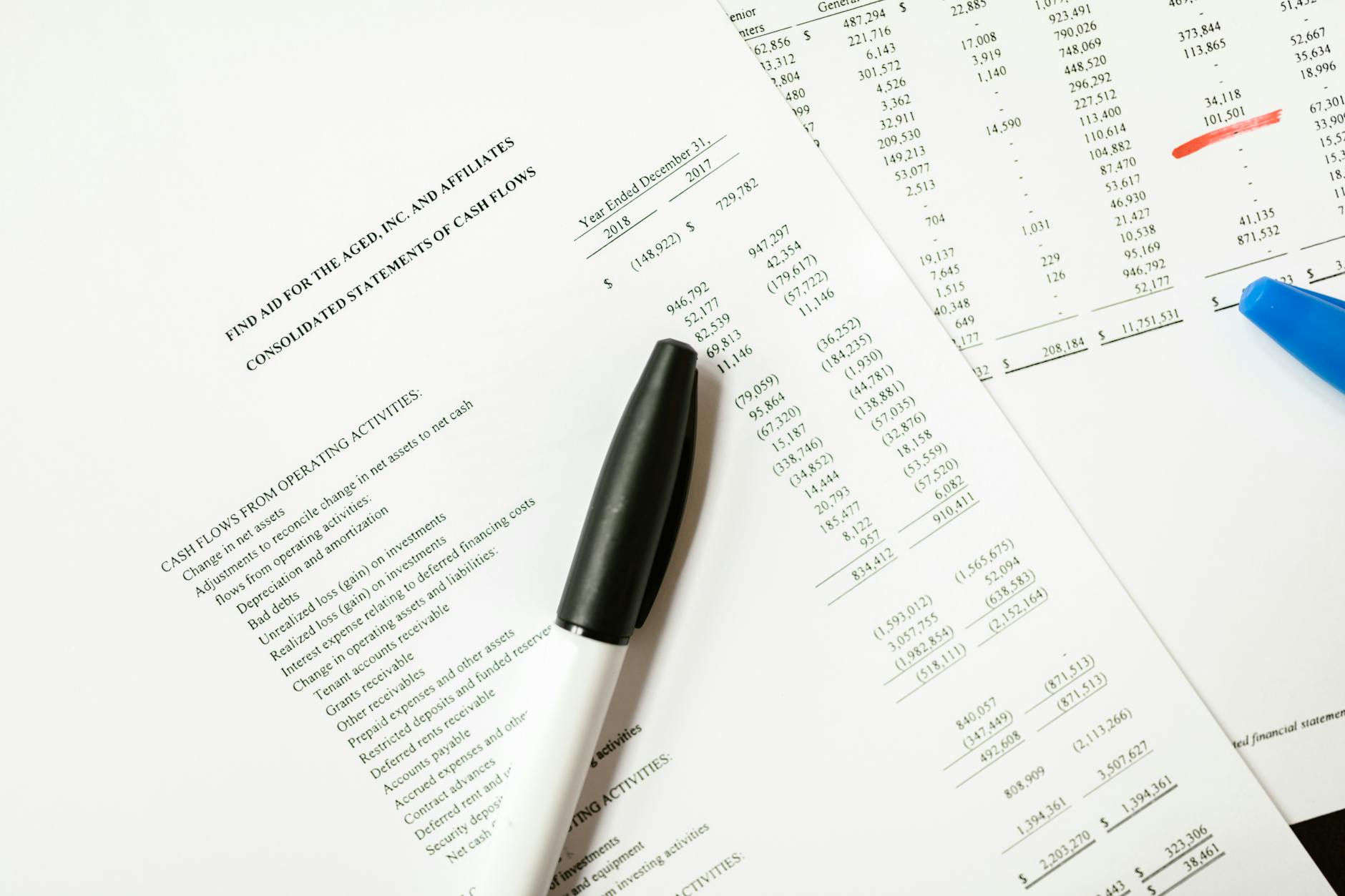
Understand Balance Sheet and Income Statement: Key Financial Statements
Decoding the Books: Understanding the Balance Sheet and Income Statement
For anyone navigating the world of business—whether you’re an entrepreneur, an investor, or a manager—the language of finance can often seem daunting. At the heart of financial literacy lie two foundational documents: the Balance Sheet and the Income Statement. These reports are not just bureaucratic necessities; they are the vital signs of a company’s health, performance, and future potential.
Mastering these two statements allows you to move beyond guesswork and make data-driven decisions. This article will break down the purpose, components, and critical insights derived from the Balance Sheet and the Income Statement.
The Balance Sheet: A Snapshot of Financial Health
The Balance Sheet, sometimes called the Statement of Financial Position, offers a precise snapshot of what a company owns and owes at a specific point in time. Think of it as a photograph taken on the last day of the fiscal period (e.g., December 31st).
The fundamental equation that governs the Balance Sheet is the bedrock of accounting:
$$text{Assets} = text{Liabilities} + text{Equity}$$
This equation must always balance, which is why the statement earns its name.
Components of the Balance Sheet
The Balance Sheet is structured into three main sections: Assets, Liabilities, and Equity.
1. Assets (What the Company Owns)
Assets are resources controlled by the company from which future economic benefits are expected to flow. They are typically listed in order of liquidity—how quickly they can be converted into cash.
Current Assets
These are assets expected to be converted into cash or used up within one year (the operating cycle).
- Cash and Cash Equivalents: The most liquid assets.
- Accounts Receivable: Money owed to the company by customers for goods or services already delivered.
- Inventory: Raw materials, work-in-progress, and finished goods ready for sale.
Non-Current (Long-Term) Assets
These assets are expected to provide economic benefit for more than one year.
- Property, Plant, and Equipment (PP&E): Tangible assets like land, buildings, machinery, and vehicles, usually reported net of accumulated depreciation.
- Intangible Assets: Assets lacking physical substance, such as patents, copyrights, and goodwill.
2. Liabilities (What the Company Owes)
Liabilities represent the company’s obligations to outside parties that must be settled in the future.
Current Liabilities
Obligations due within one year.
- Accounts Payable: Money the company owes to its suppliers.
- Short-Term Debt: Loans or portions of long-term debt due within the next 12 months.
- Unearned Revenue: Cash received from customers for services not yet rendered.
Non-Current (Long-Term) Liabilities
Obligations due after one year.
- Bonds Payable: Money borrowed through the issuance of bonds.
- Long-Term Loans: Mortgages or significant term loans.
3. Equity (The Owners’ Stake)
Equity represents the residual interest in the assets after deducting all liabilities. It is the owners’ claim on the company’s assets.
- Common Stock/Share Capital: The value of shares issued to investors.
- Retained Earnings: The cumulative net income the company has earned since its inception, minus any dividends paid out to shareholders. This is the crucial link to the Income Statement.
Key Insights from the Balance Sheet
The Balance Sheet is essential for assessing solvency and liquidity:
- Liquidity: By comparing Current Assets to Current Liabilities, analysts can determine if a company has enough short-term resources to cover its short-term debts (e.g., using the Current Ratio).
- Solvency (Leverage): By examining the ratio of Debt (Liabilities) to Equity, stakeholders can gauge how much the company relies on borrowing versus owner investment to finance its operations. A high debt-to-equity ratio suggests higher financial risk.
The Income Statement: Measuring Performance Over Time
While the Balance Sheet is a static snapshot, the Income Statement (also known as the Profit and Loss or P&L Statement) is a dynamic video recording. It details a company’s financial performance over a specific period, such as a quarter or a full year.
The primary goal of the Income Statement is to calculate Net Income (profit or loss) by matching revenues earned with the expenses incurred to generate those revenues.
The fundamental equation for the Income Statement is:
$$text{Revenue} – text{Expenses} = text{Net Income}$$
Components of the Income Statement
The Income Statement follows a structured, multi-step process to arrive at the final profit figure.
1. Revenue (Top Line)
This is the total income generated from the company’s primary business activities (selling goods or services) before any costs are deducted.
- Sales Revenue: The gross amount billed to customers.
- Sales Returns and Allowances: Reductions made for returned goods or price adjustments.
2. Cost of Goods Sold (COGS)
This is the direct cost attributable to the production of the goods or services sold by a company. For a retailer, this is the wholesale cost of the inventory they sold.
3. Gross Profit
The first key profitability metric calculated:
$$text{Gross Profit} = text{Revenue} – text{COGS}$$
Gross Profit shows how efficiently a company manages its direct production costs.
4. Operating Expenses
These are the costs incurred in the normal course of running the business, separate from the direct cost of production.
- Selling, General, and Administrative (SG&A): Includes salaries, rent, utilities, marketing, and research and development (R&D).
5. Operating Income (EBIT)
This figure reflects the profit generated purely from the company’s core business operations before considering financing costs or taxes.
$$text{Operating Income} = text{Gross Profit} – text{Operating Expenses}$$
6. Non-Operating Items and Taxes
After operating income, the statement accounts for income or expenses not related to core business activities:
- Interest Expense/Income: The cost of borrowing money or income earned from investments.
- Income Tax Expense: The amount set aside for government taxes.
7. Net Income (The Bottom Line)
This is the final result—the profit remaining after all costs, expenses, interest, and taxes have been accounted for. This figure flows directly into the Retained Earnings section of the Balance Sheet.
Key Insights from the Income Statement
The Income Statement is crucial for assessing profitability and operational efficiency:
- Profitability Margins: Analysts calculate various margins (Gross Margin, Operating Margin, Net Margin) to see what percentage of every sales dollar turns into profit at different stages.
- Trend Analysis: By comparing Net Income across several periods, stakeholders can determine if the company is growing, shrinking, or maintaining steady performance.
- Expense Control: Analyzing the relationship between revenue growth and expense growth highlights management’s effectiveness in controlling overhead.
The Crucial Link: Connecting the Two Statements
While distinct, the Balance Sheet and the Income Statement are intrinsically linked, primarily through Retained Earnings.
- The Income Statement calculates Net Income (the profit for the period).
- This Net Income is added to the previous period’s Retained Earnings on the Balance Sheet.
- If the company pays out dividends, those dividends reduce Retained Earnings.
This connection ensures that the Balance Sheet remains an accurate representation of the company’s accumulated financial position, reflecting the performance detailed in the Income Statement.
Example Scenario: A Simple Transaction
Consider a small consulting firm that completes a $5,000 project in December, receiving cash immediately.
Impact on the Income Statement (for December):
- Revenue increases by $5,000.
- Net Income increases by $5,000 (assuming no associated immediate expenses for simplicity).
Impact on the Balance Sheet (as of December 31st):
- Assets: Cash increases by $5,000.
- Equity: Retained Earnings increases by $5,000 (due to the Net Income recognized above).
The Balance Sheet remains balanced: Assets ($5,000 increase) = Liabilities ($0) + Equity ($5,000 increase).
Conclusion: Beyond the Numbers
The Balance Sheet and the Income Statement are the twin pillars of corporate financial reporting. The Balance Sheet tells you where the company stands financially at a moment in time—its resources and obligations. The Income Statement tells you how the company performed over a period—its efficiency and profitability.
Understanding the structure and relationship between these two documents is not merely an accounting exercise; it is the foundation for sound business judgment, effective investment decisions, and sustainable growth strategies. By routinely analyzing these reports, any business stakeholder can gain a comprehensive, clear view of the organization’s past performance and future viability.