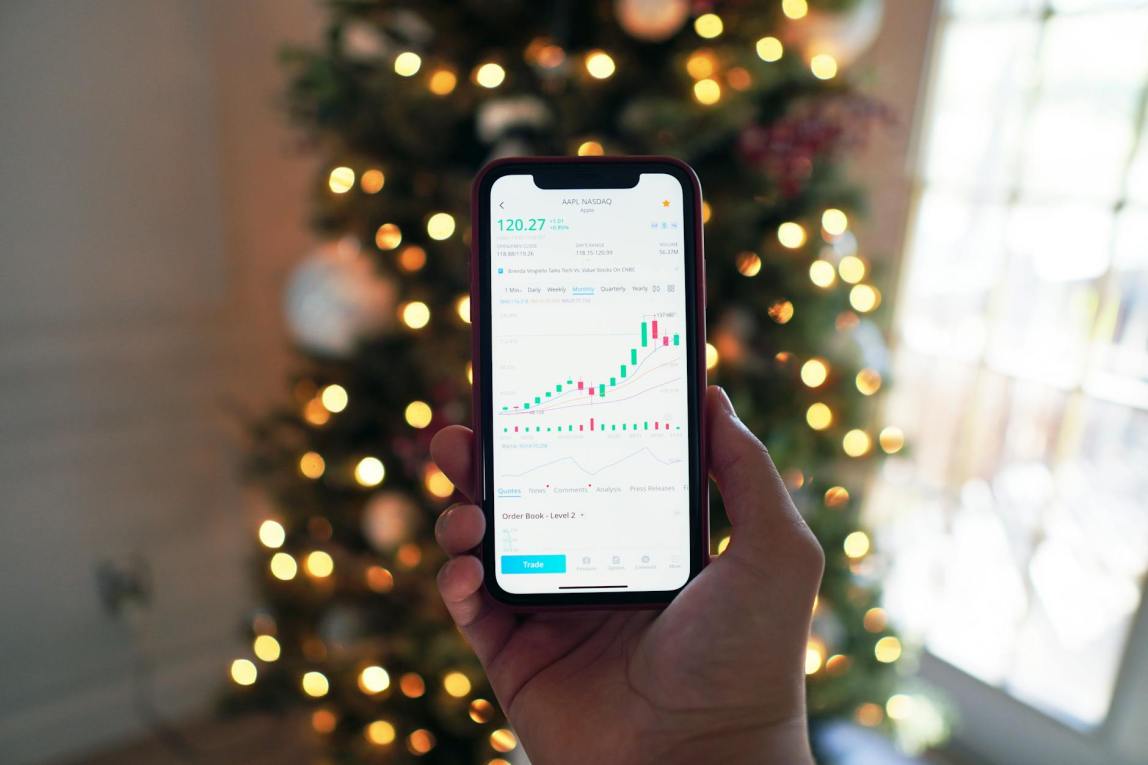
Best Investment Apps for Beginners: Start Building Wealth Now
Best Investment Apps for Beginners: Start Building Wealth Today
The world of investing can seem complex, intimidating, and reserved only for those with deep pockets or advanced financial degrees. However, the digital age has democratized finance, making it easier than ever for beginners to start building wealth. Investment apps have revolutionized the landscape, offering low-fee structures, fractional shares, and intuitive user interfaces that welcome newcomers.
If you’re ready to move beyond the savings account and put your money to work, this guide will walk you through the best investment apps tailored specifically for beginners, helping you take that crucial first step toward financial independence.
Why Use Investment Apps? The Modern Advantage
Before diving into specific platforms, it’s important to understand why modern investment apps are the ideal entry point for new investors:
Accessibility and Low Barriers to Entry
Traditional brokerages often required high minimum deposits. Today’s apps allow you to start investing with as little as $5 or even $1, thanks to the prevalence of fractional share trading.
User Experience (UX)
These apps are designed with simplicity in mind. Clean dashboards, educational resources built into the platform, and streamlined transaction processes remove much of the confusion associated with older trading platforms.
Cost Efficiency
Most leading beginner-friendly apps offer commission-free trading for stocks and ETFs, significantly reducing the cost of building a diverse portfolio.
Automation and Fractional Shares
Many apps allow you to set up recurring investments (dollar-cost averaging) automatically. Furthermore, fractional shares let you own a piece of expensive stocks like Amazon or Google without needing hundreds of dollars upfront.
Key Factors to Consider When Choosing Your First App
Selecting the right platform is crucial. While many apps look similar on the surface, they differ significantly in fees, features, and educational support. Here are the core factors beginners should evaluate:
1. Fee Structure
Look for zero-commission trading on stocks and ETFs. Be wary of hidden fees, such as inactivity fees or high expense ratios on proprietary mutual funds offered by the platform.
2. Investment Minimums
For beginners, the lower the minimum, the better. Apps supporting fractional shares are highly recommended.
3. Educational Resources
A good beginner app should offer tutorials, articles, webinars, or in-app guides to explain basic concepts like diversification, risk tolerance, and market mechanics.
4. Available Investment Types
Ensure the app offers the assets you are interested in—whether that’s individual stocks, Exchange-Traded Funds (ETFs), or mutual funds. For most beginners, a strong offering of low-cost ETFs is the ideal starting point.
5. Security and Regulation
Always choose apps that are registered with the Securities and Exchange Commission (SEC) and are members of the Financial Industry Regulatory Authority (FINRA). Ensure your assets are protected by the Securities Investor Protection Corporation (SIPC).
The Best Investment Apps for Absolute Beginners
Based on ease of use, low costs, and educational support, these platforms stand out as excellent starting points for anyone new to investing.
1. Fidelity Investments: The Established Powerhouse with Modern Tools
Fidelity is a titan in the brokerage world, but its mobile app has evolved to be incredibly user-friendly for beginners. It offers the security of a massive, established firm combined with modern, commission-free trading.
Why it’s great for beginners:
- Fidelity Go (Robo-Advisor): For those who want zero decision-making, Fidelity Go manages investments automatically based on your risk profile. It has a competitive fee structure for automated investing.
- Fractional Shares: Fidelity allows you to buy fractional shares of thousands of stocks and ETFs, making diversification easy on a small budget.
- Robust Research: Access to institutional-grade research reports and extensive educational content.
Best for: Beginners who value security, want access to both self-directed trading and automated options, and appreciate top-tier customer service.
2. Robinhood: The Gateway to Commission-Free Trading
Robinhood popularized commission-free trading and remains one of the simplest apps to navigate. Its clean, minimalist interface makes placing trades incredibly fast.
Why it’s great for beginners:
- Simplicity: The interface is designed for quick execution. If you want to buy a stock with two taps, Robinhood excels.
- Fractional Shares: Allows investment in almost any stock or ETF with any dollar amount.
- No Account Minimums: You truly can start with $1.
A word of caution: While simple, Robinhood has historically been criticized for lacking deep educational resources compared to competitors. Beginners should use this platform for execution but seek external resources to understand what they are buying.
Best for: Users prioritizing ease of use and speed, who are comfortable learning investment basics elsewhere.
3. M1 Finance: The Automation Specialist
M1 Finance bridges the gap between traditional brokerage accounts and robo-advisors. It allows users to build custom portfolios, called “Pies,” which are collections of stocks and ETFs that you define.
Why it’s great for beginners:
- Automated Investing: Once you set up your Pie (e.g., 60% VTI, 30% VXUS, 10% individual stocks), M1 automatically allocates all new deposits according to those percentages. This enforces discipline.
- The “Pie” Concept: This visual representation makes portfolio allocation easy to understand and manage.
- Fractional Shares: Essential for maintaining precise target allocations.
Best for: Beginners who want to set a long-term strategy and then let the app handle the day-to-day allocation automatically, enforcing dollar-cost averaging.
4. Betterment: The Pure Robo-Advisor Experience
If your goal is to invest passively without ever having to pick a single stock or ETF, Betterment is a leading choice. It is a pure robo-advisor service.
Why it’s great for beginners:
- Goal-Based Investing: You set a financial goal (e.g., Retirement, Down Payment), and Betterment builds and manages a diversified portfolio of low-cost ETFs tailored to that goal’s timeline.
- Automatic Rebalancing: The app constantly monitors your portfolio and automatically buys or sells assets to keep you on track with your target allocation.
- Tax-Loss Harvesting (Premium Feature): For taxable accounts, this advanced feature can help minimize your tax bill, though it’s more relevant as your portfolio grows.
Best for: Investors who want a completely hands-off approach and prefer professional management based on modern portfolio theory.
Starting Your Investment Journey: A Simple Three-Step Plan
Once you have selected an app, the process of actually starting to invest can be broken down into manageable steps.
Step 1: Define Your Goal and Risk Tolerance
Before funding your account, ask yourself: What is this money for, and when will I need it?
- Short-term (1-3 years): Keep this money in a high-yield savings account, not the stock market.
- Medium-term (3-10 years): You can tolerate moderate risk. A balanced portfolio (e.g., 60% stocks/40% bonds) is often appropriate.
- Long-term (10+ years): You can afford to be aggressive, as you have time to recover from market downturns. A higher allocation to stocks (e.g., 80-100%) is typical.
Step 2: Fund Your Account and Choose Your First Asset
Most beginners should start by investing in low-cost, broad-market Exchange-Traded Funds (ETFs). These funds hold hundreds or thousands of underlying stocks, providing instant diversification.
Recommended Beginner ETFs:
- VTI (Vanguard Total Stock Market ETF): Tracks nearly the entire U.S. stock market.
- VOO (Vanguard S&P 500 ETF): Tracks the 500 largest U.S. companies.
- VT (Vanguard Total World Stock ETF): Provides global diversification by including both U.S. and international stocks.
Use your chosen app to purchase a small amount of one of these ETFs. If the price is too high for a full share, use the fractional share feature.
Step 3: Automate Your Investing (Dollar-Cost Averaging)
The single most effective habit for new investors is Dollar-Cost Averaging (DCA). This means investing a fixed amount of money on a regular schedule (e.g., $100 every two weeks), regardless of whether the market is up or down.
DCA removes emotion from investing and ensures you buy more shares when prices are low and fewer shares when prices are high, lowering your average cost over time. Set up an automatic transfer and purchase within your chosen app.
Conclusion: Consistency Trumps Complexity
The best investment app for a beginner is the one you will actually use consistently. While features like stock screeners and advanced charting are exciting, they are secondary to the core principles of long-term investing: starting early, keeping costs low, and investing regularly.
Fidelity, Robinhood, M1 Finance, and Betterment all provide excellent, low-friction entry points into the market. Choose the platform whose interface resonates most with you, set up your automated investments into a diversified ETF, and then focus on learning, not timing the market. Building wealth is a marathon, and by starting today with the right tools, you’ve already taken the most important step.