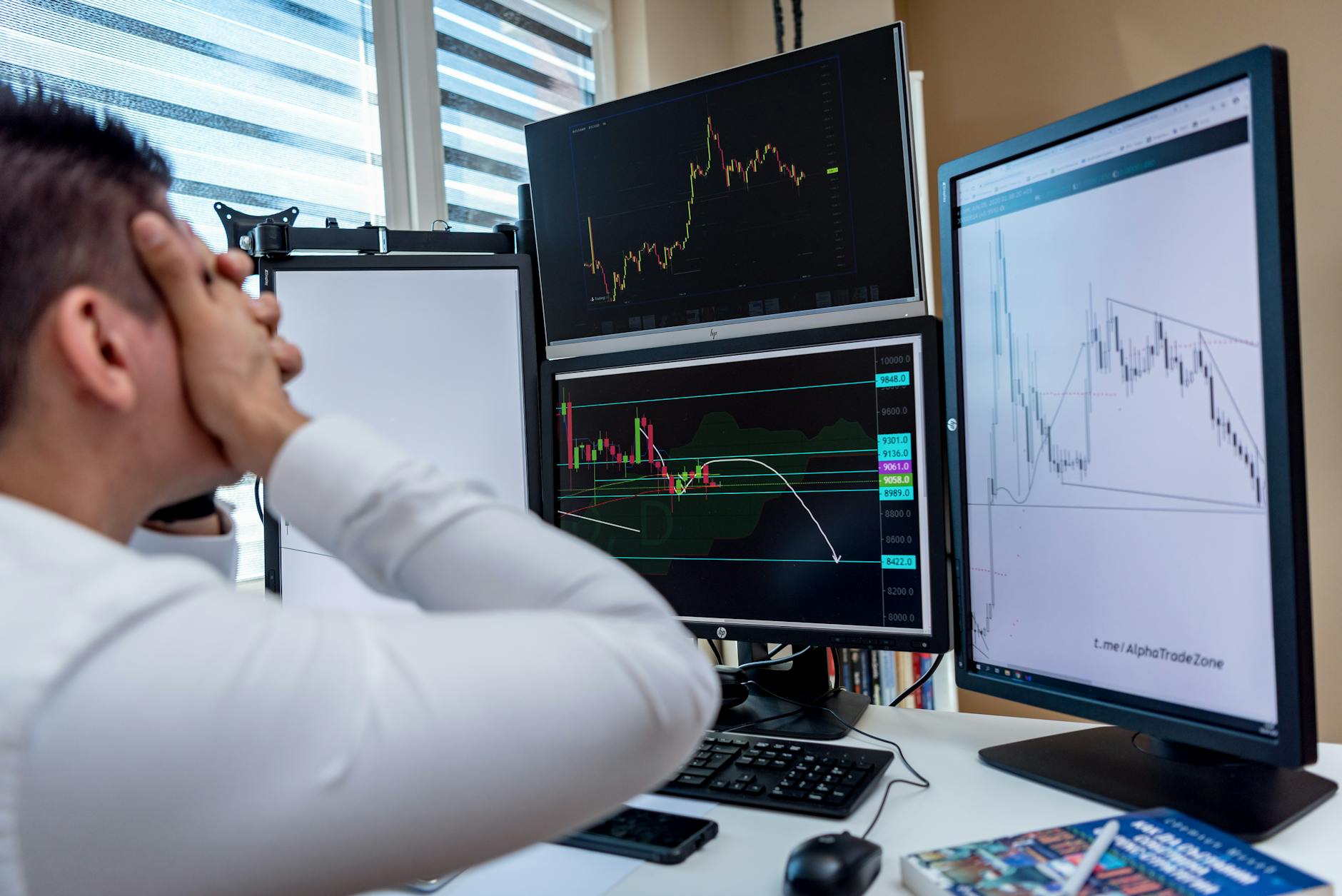
Track Investment Portfolio Performance Without Obsessing: Expert Tips
Investment Portfolio Monitoring: Track Performance Without Obsessing
For many investors, the act of building an investment portfolio is only half the battle. The real challenge often lies in what comes next: monitoring. Should you check your balances daily? Weekly? Monthly? How do you gauge performance without letting market volatility hijack your emotional well-being?
The key to successful long-term investing isn’t frantic, minute-by-minute checking; it’s disciplined, strategic monitoring. This guide will explore how to establish an effective portfolio review cadence that keeps you informed, aligned with your goals, and, crucially, prevents obsession.
The Dangers of Over-Monitoring
Before diving into best practices, it’s essential to understand why constant checking is counterproductive, especially for long-term investors.
Confirmation Bias and Emotional Trading
When you check your portfolio constantly, you are highly susceptible to market noise. If the market is up, you might feel overly confident and take unnecessary risks (chasing returns). If the market drops, you might panic and sell low, locking in losses. This cycle of emotional trading is the single greatest destroyer of long-term wealth.
The Illusion of Control
Monitoring every fluctuation gives you the illusion that you can control the outcome. In reality, short-term market movements are largely random and unpredictable. Focusing too closely on daily dips distracts you from the fundamental drivers of your investments—the long-term growth of the underlying companies or assets.
Time Drain
How much time are you willing to dedicate to your wealth? If monitoring becomes a daily chore that consumes hours, it detracts from activities that could genuinely improve your financial life, such as earning more income, reducing debt, or enjoying retirement planning.
Establishing Your Monitoring Cadence: Quality Over Quantity
Effective monitoring is about setting a schedule that matches your investment horizon and your temperament. There is no one-size-fits-all answer, but a tiered approach works best.
Tier 1: The Daily Check-In (The “Pulse Check”)
For most investors, a daily deep dive into specific holdings is unnecessary. However, a quick, high-level check can be useful for maintaining awareness without inducing anxiety.
What to do:
- Review News, Not Balances: Spend five minutes scanning reputable financial news sources (e.g., The Wall Street Journal, Bloomberg) to understand why the market might be moving. Is there a major economic announcement? A geopolitical event?
- Check Major Indices (Optional): Glance at the S&P 500 or your primary benchmark index. This gives you a general sense of the market’s direction for the day.
- Avoid Clicking Through to Individual Holdings: Resist the urge to see how your specific stocks performed. This is where the emotional trap lies.
Who this is for: Active traders, those nearing retirement who need to be aware of immediate liquidity needs, or investors who simply need the reassurance of knowing the market hasn’t completely collapsed.
Tier 2: The Weekly Review (The “Alignment Check”)
The weekly review is often the sweet spot for the average long-term investor. It provides enough time for minor market noise to settle while keeping you engaged.
What to do:
- Review Asset Allocation: This is the most critical weekly task. Has your target allocation (e.g., 60% stocks, 40% bonds) drifted significantly due to market movements? If stocks have outperformed, you might be overweight in equities, increasing your risk profile unintentionally.
- Cash Flow Monitoring: Ensure any automatic contributions (401(k) contributions, brokerage deposits) have executed correctly.
- Rebalancing Trigger Check: If your allocation drift has crossed your predetermined rebalancing threshold (e.g., 5% deviation), plan the necessary trades for the following week.
Who this is for: Most buy-and-hold investors, those contributing regularly, and anyone managing a portfolio with moderate complexity.
Tier 3: The Quarterly/Semi-Annual Deep Dive (The “Strategy Check”)
This is where you assess the fundamental health and strategic fit of your portfolio. These reviews should be scheduled events, treated with the same seriousness as a tax filing.
What to do:
- Performance Attribution: Don’t just look at the total return. Ask why you performed as you did. Did your international holdings outperform your domestic ones? Did your value stocks beat your growth stocks? Compare your performance against your chosen benchmarks (e.g., comparing your total portfolio against the MSCI World Index).
- Goal Progress Assessment: If you are saving for a house down payment in five years, is your current portfolio trajectory still on track to hit that dollar goal? If you are 20 years from retirement, are you still comfortable with the current level of volatility?
- Review Holdings for Relevance: Have any of your core holdings fundamentally changed? Has a company you invested in years ago been acquired, gone bankrupt, or drastically altered its business model? This is the time to prune outdated investments.
- Tax-Loss Harvesting (If Applicable): For taxable accounts, review opportunities to sell assets at a loss to offset capital gains realized elsewhere.
Who this is for: Every investor. This strategic review ensures your portfolio structure still matches your life goals and risk tolerance.
Key Metrics to Track (And Which to Ignore)
Not all performance indicators are created equal. Focusing on the right metrics prevents you from being distracted by vanity figures.
Essential Metrics to Monitor
| Metric | Why It Matters | Review Frequency |
|---|---|---|
| Total Return (Time-Weighted) | Measures the actual growth of your capital, removing the impact of new contributions. | Quarterly/Semi-Annually |
| Asset Allocation Drift | Shows if your risk level has changed relative to your plan. | Weekly/Monthly |
| Expense Ratios | High fees erode returns silently over decades. Ensure your funds remain low-cost. | Quarterly |
| Contribution Rate | Are you consistently saving and investing the amount you planned? | Monthly |
Metrics to Generally Ignore (or Use with Caution)
- Daily Percentage Changes: As discussed, these are noise. A 1% swing means almost nothing over a 30-year timeline.
- Individual Stock Volatility: Unless you are a professional trader, the daily price swings of a single stock are irrelevant if you believe in the company’s 10-year thesis.
- Peer Comparison (Unless Strategic): Comparing your return to your neighbor’s is rarely productive. Your neighbor might have a completely different risk tolerance, time horizon, or tax situation. Focus only on comparison against your predefined benchmark.
Tools for Efficient Monitoring
The right technology can automate the tedious parts of monitoring, allowing you to focus on strategic analysis.
Portfolio Aggregators
Services like Personal Capital (Empower), Mint, or specialized brokerage dashboards can link all your accounts in one place. This saves time by eliminating the need to log into five different platforms just to see a total balance.
Benefit: Provides a unified, real-time view of net worth and asset allocation.
Automated Rebalancing Tools
Many modern brokerage platforms offer automatic rebalancing features. You set your target allocation (e.g., 70/30), and whenever one asset class drifts by a set percentage (e.g., 5%), the system automatically buys or sells to bring it back into line.
Benefit: Removes the manual effort and emotional decision-making from maintaining your target risk profile.
Performance Benchmarking Software
If you use a sophisticated platform or spreadsheet, ensure you are tracking performance using the Time-Weighted Rate of Return (TWR), especially if you make frequent deposits or withdrawals. The TWR isolates the performance of the investment manager (or your strategy) from the timing of your cash flows.
Conclusion: Monitoring as Maintenance, Not Micromanagement
Investment portfolio monitoring should feel like routine preventative maintenance on a reliable car—checking the oil, rotating the tires, and ensuring the alignment is correct. It should not feel like constantly staring at the engine temperature gauge while driving through rush hour traffic.
By establishing a clear, tiered cadence—a quick pulse check daily, an alignment review weekly, and a deep strategic dive quarterly—you ensure your portfolio remains on course without letting market volatility dictate your mental state. Discipline in monitoring allows you the freedom to ignore the noise and trust the long-term process you have established.